

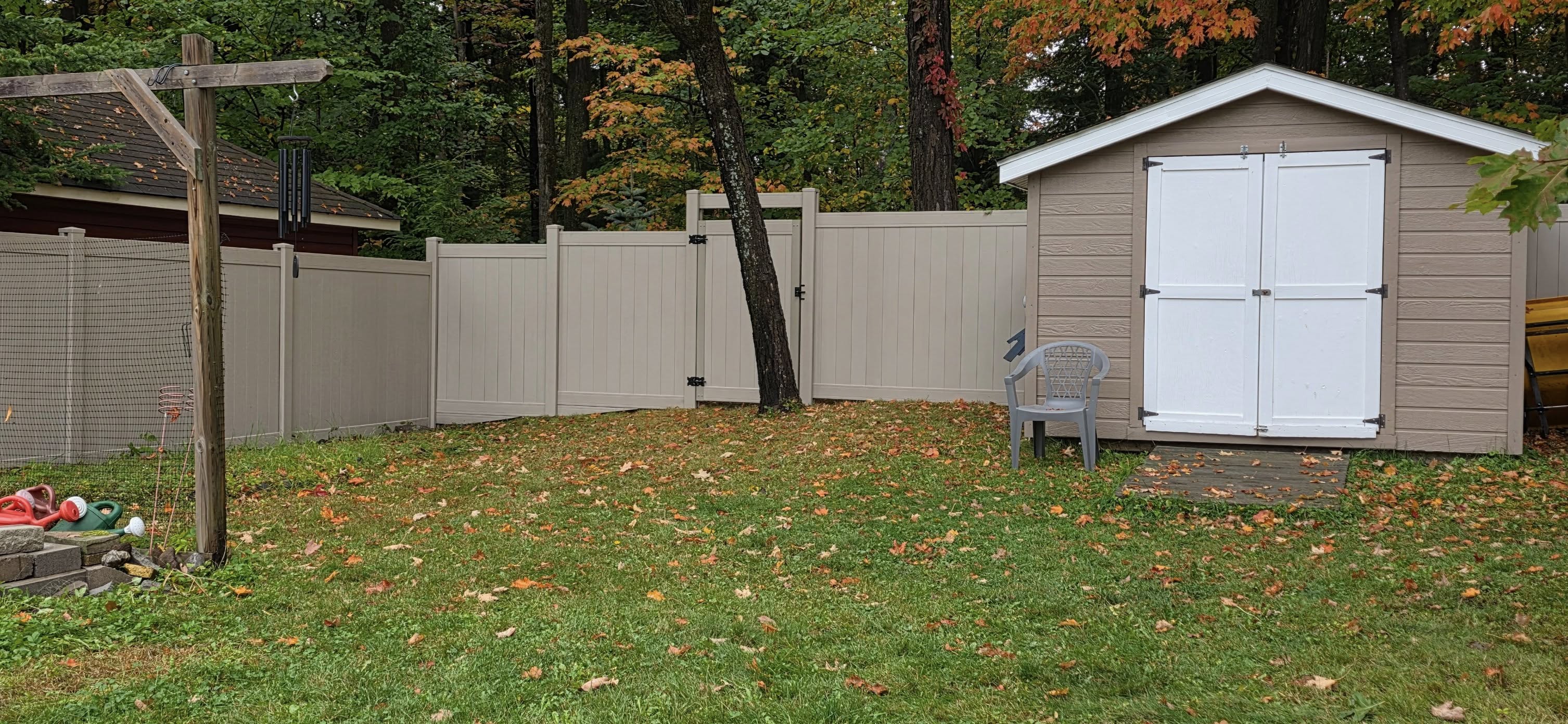
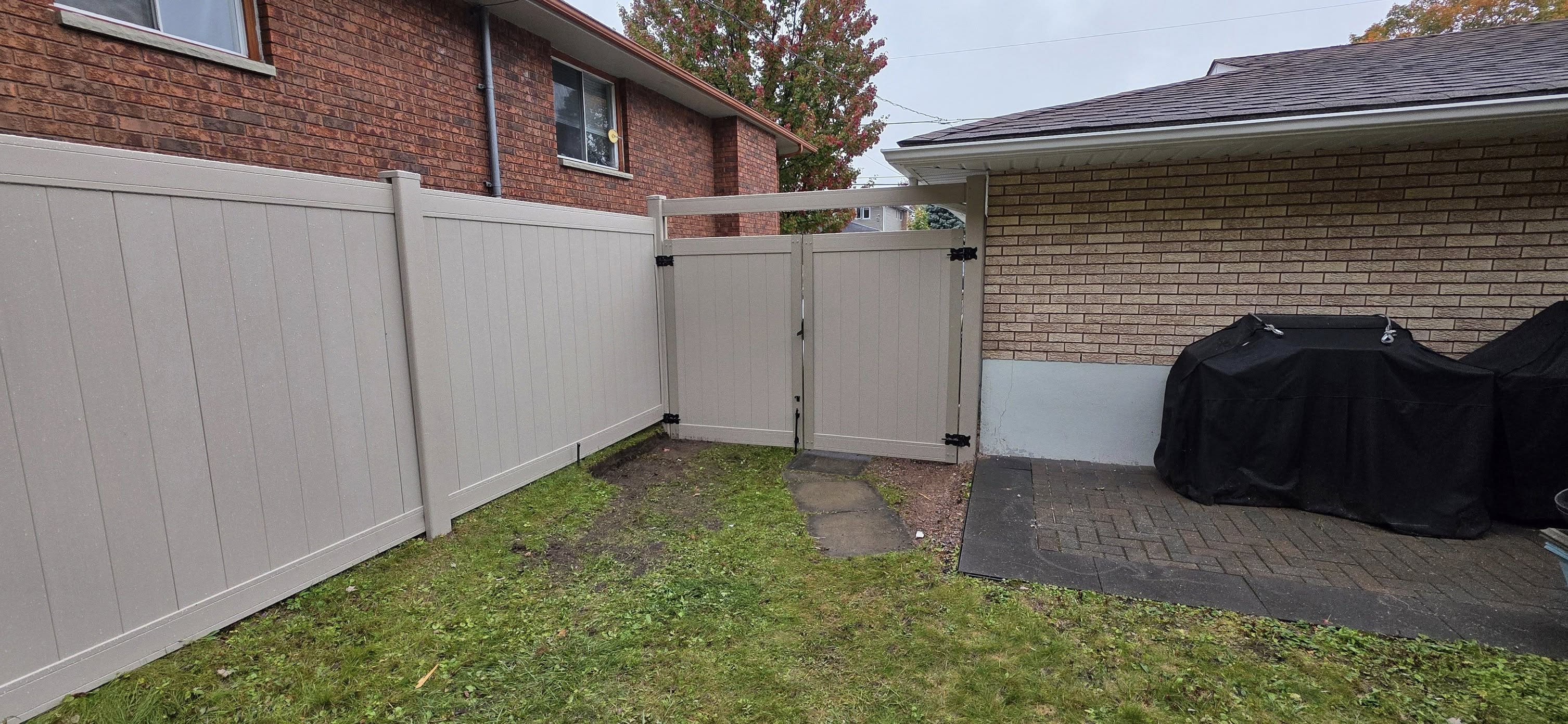
For fencing options, include vinyl, aluminum, and composite. With the cost of wood continuing to rise, choosing these alternative fences makes more sense. These materials require minimal maintenance and are resistant to rot, warping, and insects, unlike traditional wood fences. Simply clean them and enjoy their beauty without the need for painting or staining. Decks and fences work well together to create a cohesive look for your outdoor space.
We can build these fences to your specifacations adding single or double gates which, include powdered coated hindges and hareware. Typically before installation some properties require leveling or grading which helps with water drainage issues. We have the equipment to regrade your property so that the fence can trend on a consistent slope instead of stepping down each panel.
Fencing is one of the most important parts of finishing a yard, offering both function and curb appeal. Wood fencing has been the traditional choice for decades because it’s customizable, paintable, and relatively inexpensive upfront. The trade-off is the ongoing maintenance: wood can rot, warp, or fade, and requires regular staining or painting to last. Vinyl fencing, on the other hand, is more expensive at installation but provides a low-maintenance, long-lasting solution. It won’t rot, chip, or fade easily and only needs occasional cleaning with soap and water.
For the perfect yard boundary, we begin by removing any old fencing, posts, or debris and hauling it away. Installing vinyl or wood is usually only done when a property needs improved privacy, safety, or a clean new look. Once the old material is cleared, we’re left with the existing soil and ground conditions. Sometimes the subgrade is soft or uneven, which can cause fence lines to shift or lean over time. Other times, rocky or sandy soils mean posts don’t set properly. Either way, we address the sub-base and footing conditions before installation so the fence will stand strong for years.
We start by laying out the fence line, marking corners, and ensuring the design slopes appropriately with the land. Post holes are then dug below the frost line to prevent shifting in winter, with gravel or concrete used to stabilize each post. For vinyl fences, it’s crucial to measure carefully, as panels are pre-manufactured and require precise spacing. Unlike wood, vinyl panels can’t be trimmed or adjusted easily once installed, so the sub-base and layout need to be exact.
Wood or vinyl, both options require a straight and well-supported line of posts. Wood offers more flexibility in shaping around tricky areas, while vinyl excels in uniform, clean lines with minimal upkeep. Choosing between the two depends on budget, desired look, and how much maintenance you’re willing to take on long term.